
Empowering Impact
The Oikos Institute helps Black churches recognize the capital they already possess.
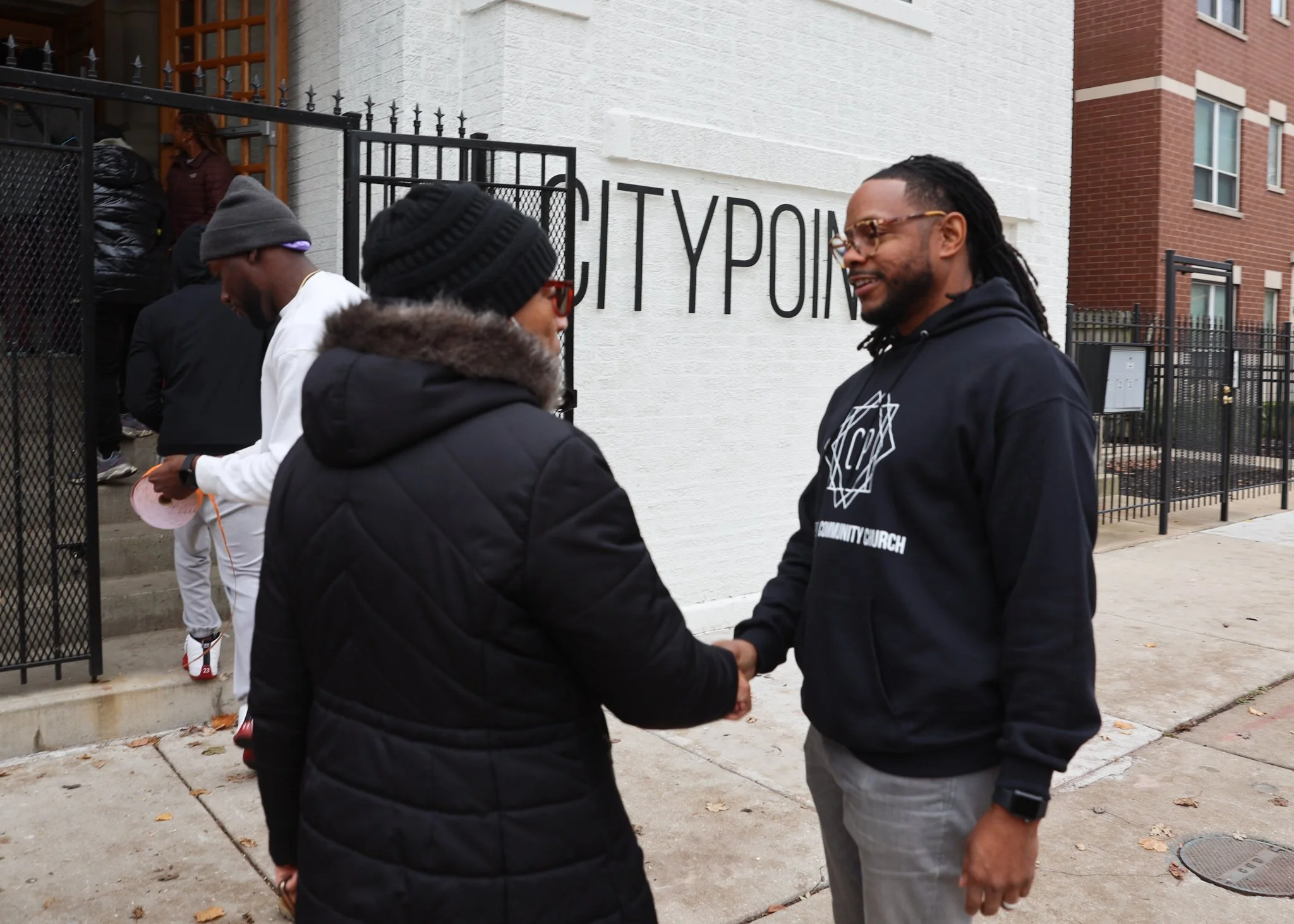
“The Black Church has had to be all things for all people within our community. That's just been a part of the calling since we've been on these shores.” The Reverend Dr. James Bailey (DMin ’25) communicates pride but also profound responsibility through this description. As a member of the recent Oikos Institute cohort, Dr. Bailey joined 14 other Garrett alumni reflecting on how Black churches can expand their social impact, marshaling the resources already present in their communities and congregations to empower this work. Led by Garrett professor and Oikos Institute co-founder Rev. Dr. Reginald Blount, Oikos Institute co-founder Rev. Dr. Sydney Williams, and Oikos Regional Coordinator Rev. Dr. Brian Smith (MDiv ’15, DMin ’24), the group offered a framework to help expand pastors’ imagination, and provide scaffolding that converts dreaming into action.
Founded in 2008, the Oikos Institute—part of Garrett’s Faith and Leadership Collaborative—employs a “F.I.S.H. Differently” model to help leaders identify financial, intellectual, social, and human capital. That wisdom pays dividends.
“One thing that’s preached within the cohort is, ‘don’t underestimate the notion that what you need is already in your own house,’” says the Reverend Demetrius Davis (MAPM ’22), who participated alongside Dr. Bailey. “It’s caused me to dream bigger about how we engage high-capacity givers. How can buildings be repurposed? How can land bring in extra revenue for the building, for our mission?”
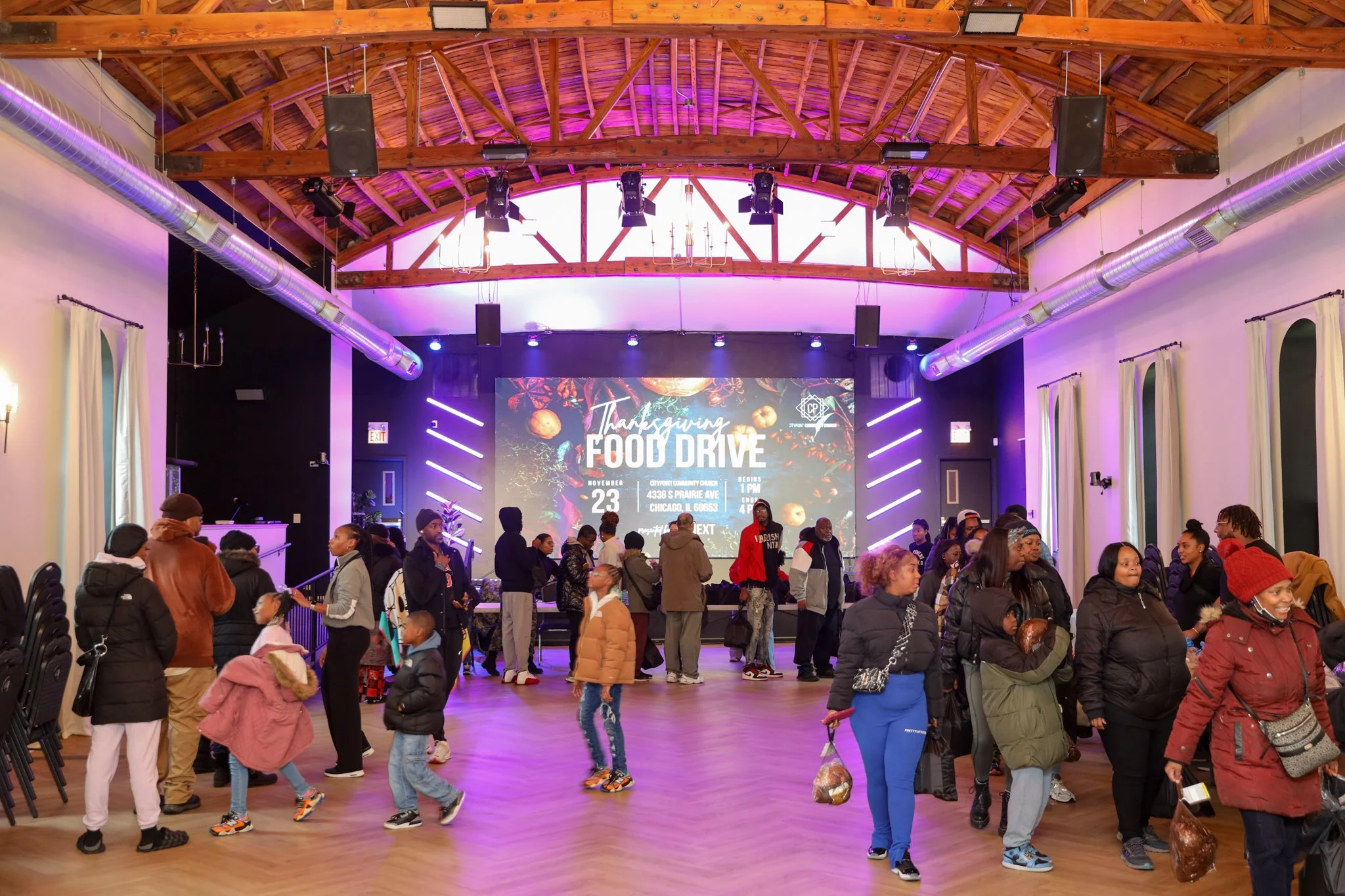
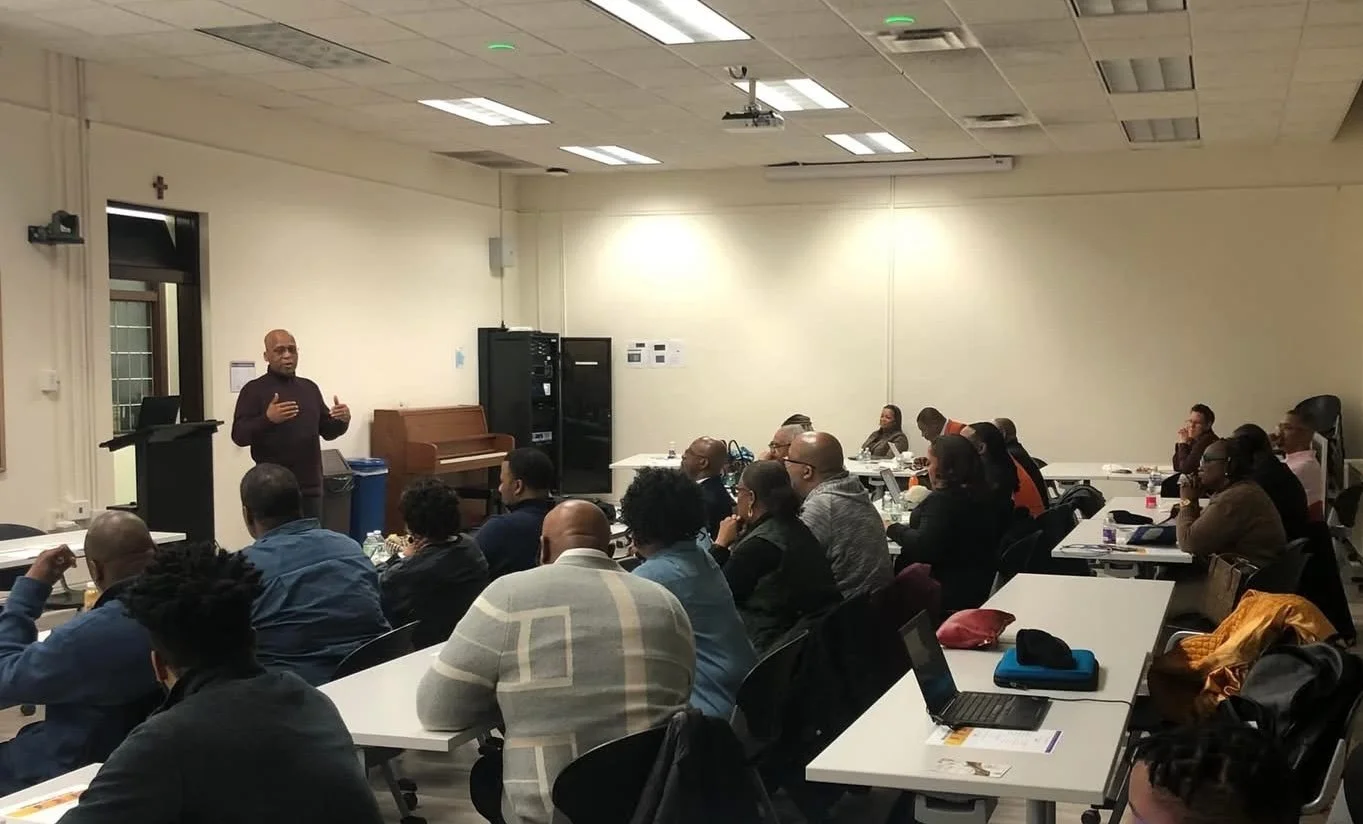
The lead pastor of City Point Community Church in Chicago’s Bronzeville neighborhood, the church Rev. Davis planted already operates a food pantry, a prison ministry, athletic programs, financial education ministries and more. But now, they’ve set their sights bigger. “We have a goal next year of sparking 100 new homeowners within our congregation and sphere of influence,” he says. “Engaging our networks has already connected us with promising lending partners.” His dreaming doesn’t stop there, setting its sights on empowering neighbors across Chicago’s South Side. “Bronzeville is still underserved by commerce. We have commercial corridors with too many empty storefronts,” he explains. “We’re starting to plan how we can incubate small businesses to fill them. Either we’ll purchase a commercial building and create an incubator there or intentionally partner with commercial landlords to help small businesses get started.”
For the Reverend Dr. Brian Smith, this expansive vision is the Holy Spirit on the move. “I can see Rev. Davis’ congregation becoming a community bank, lending out millions of dollars for home ownership and emerging businesses,” he says with joy. “In other churches, I’m seeing expanded food pantries, solar panel installation, affordable housing projects.”

At St. Stephen African Methodist Episcopal Church, where Dr. Bailey serves as pastor, the congregation has begun exploring a partnership with Rush University Medical Center to become a hospital hub for local elders. “We now have a location where they will be able to come and get their health needs addressed,” he explains. “The Black Church’s work is not only about addressing soul matters. We must provide food access, educational opportunities, and fight for people’s rights and equity.”
When churches are called to meet such comprehensive needs, it can feel like a daunting task. “You start seeing that process up close—what it means and requires, the significant cost involved—and that can be intimidating,” Dr. Bailey notes. “But Oikos helps you see what you already possess. Through partnerships and collaboration, what may seem like a mountain starts looking more like a hill; one that’s climbable for you and your organization.” The cohort learning model is specifically designed to produce this mental shift. “When I graduated from Garrett, it was both celebration and mourning because I feared losing the community I found,” Rev. Davis reflects. “This has allowed me to continue fostering connection with that tribe in an even more specialized way, because I’m engaging pastors who are dealing with similar challenges to those I’m encountering.”
For Dr. Blount, work with the cohort has been just that: An extension of the Garrett classroom into a circle of alumni who embody the best of what the seminary nurtures. As director for Garrett’s Center for the Church and the Black Experience, he had the chance to guide all these pastors as they embraced their call—some recently, some decades prior. “It’s been wonderful to watch those alumni become leaders not just in their congregations, but in their communities and denominations,” he says with a smile. “It’s no accident. Our Methodist ethos, rooted in social piety and social witness, produces graduates who go forth committed to communal and personal transformation—addressing justice issues in a variety of ways.”
The process has underscored how important it is to provide continuing education. “When you are doing ministry in under-resourced communities it’s not uncommon to find yourself in survival mode, just trying to deal with things day-by-day,” he says. “Unfortunately, one of the byproducts of survival mode is scarcity thinking. The cohort offers members an opportunity to shift their mindset to one of possibility—to know that you serve a God of abundance and lean into that promise.”
In this shift, Dr. Smith sees more than logistical expansion. It’s holy proclamation. “I often think about the word becoming incarnate,” he reflects. “Certainly, evil is taking flesh and dwelling in the world. Why can’t we see goodness, mercy, and righteousness emerge in concrete ways that we can feel and touch?” As Dr. Blount notes, social impact ministries are not an addendum to the church’s core functions. They are acts of discipleship. “When congregations engage in the work of food insecurity, communal health, or affordable housing, these are not charitable projects,” he says. “They are what it means to follow in the way of the one who promised, ‘Whatever you have done for the least of these, you have done unto me.”
In five years, OIKOS plans to replicate this model in twenty cities that are experiencing high levels of gentrification, where Black neighborhood displacement is a significant risk. “We don’t see our work as saving churches,” he concludes. “We see our work as helping faith communities own their vital role as agents for communal transformation.”
Among the cohort, that message planted deep roots. “Church can give a people hope and sustenance, the knowledge that God can still turn things around for you. That’s what the gospel does, especially in times where things weigh so heavy on head and heart,” Dr. Bailey says with confidence. “Garrett helps you see that this work is possible—but also that we cannot do it without each other.” In an ecclesial world that too often mirrors worldly competition, collaboration offers a different path forward. “I’ve been able to push through growth barriers that others in the cohort are encountering, so now our church is dreaming how we can support them,” Rev. Davis adds. “It’s time to roll up our sleeves and do the work.”
A Theology of Accompaniment
Patrick Paddock ’25 is ready to begin accepting clients into his clinical practice.