

Small Churches Make a Big Difference
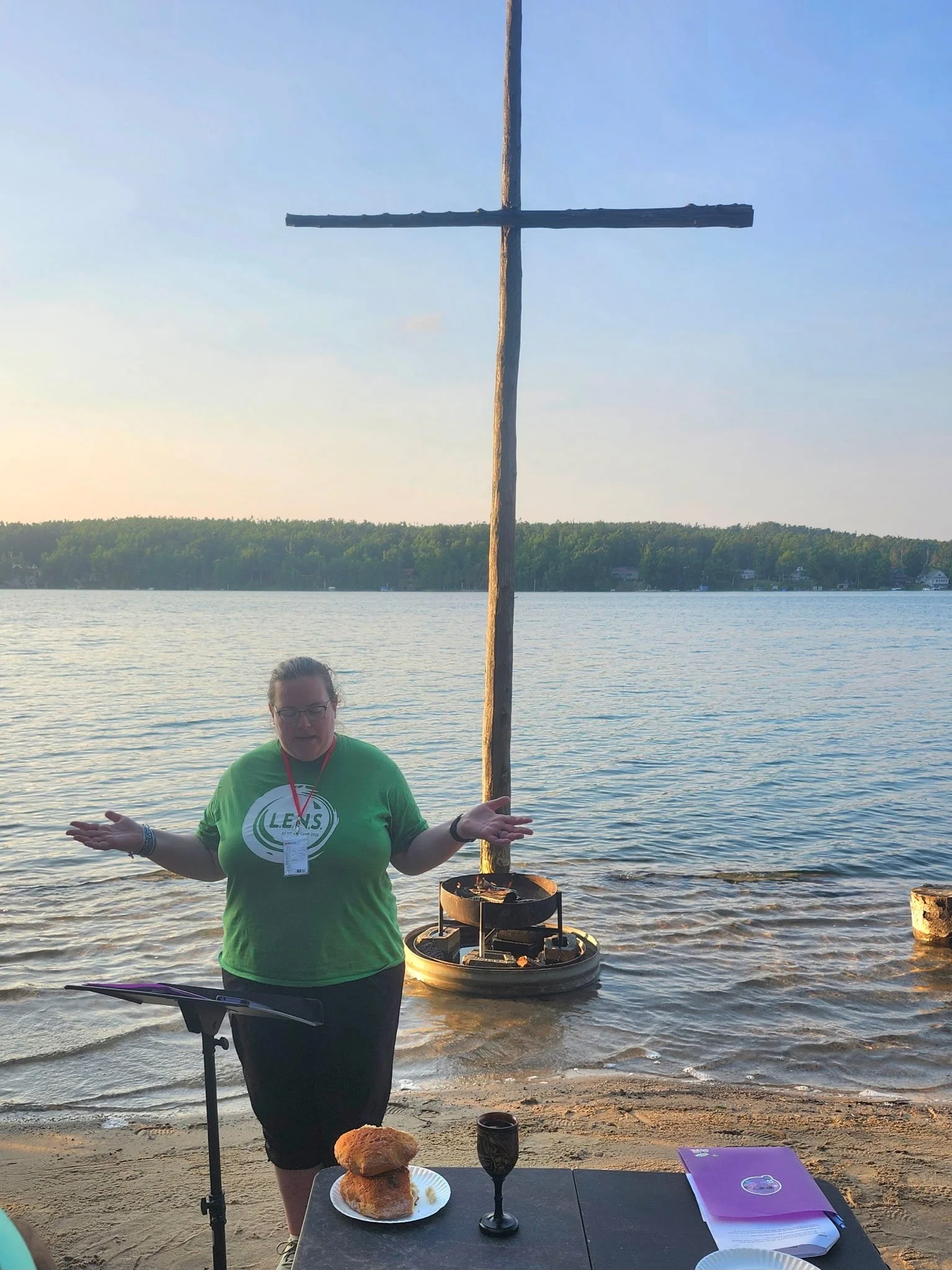
Rev. Kelsey French ’20 brings social holiness to rural Michigan.
“I chose Garrett because I wanted to go somewhere that would prepare me to be a good pastor. I think that really did come true.” Six years into serving Hopkins United Methodist Church in Western Michigan, Rev. Kelsey French has settled into the rhythms of small-town parish life—the joys of knitting community in a rural parish. It’s well-earned peace for a minister who accepted her call in the summer of 2020, accepting the mantle of leadership in a cultural moment that even veteran pastors describe as one of their most challenging seasons in ministry. “It was such a wild time to start, but the church’s active life has continued to feed my spirit,” she says contentedly. “Going into ministry, I decided, ‘I’ll do these three years, and then I’ll just jump in and it’s going to happen.’ Especially in COVID times, of course I wasn’t 100% equipped on day one, but there was something freeing in knowing that everyone was flying by the seat of their pants. I found I had the skills to make it work.”
The Hopkins township is only 600 people—no stoplight needed—but the challenges Rev. French has helped her congregation address are every bit as serious as those faced in more populous regions. “One thing I’m really proud of is how the congregation responded after we found out the apartment building in town received a notice that their water wasn’t drinkable, that they’d have to live under a boil water advisory until the pipes were fixed,” she shares. “As the only apartments in town, it’s where most of the poorest people live. There were other churches closer by, but ours was the one that provided bottled water throughout the crisis, building a relationship as we dropped off jugs week after week.”
The church also serves as a gathering spot for families who live in the surrounding countryside. “We do a big Easter Egg hunt and Halloween trick-or-treat every year, and often get as many as 400 kids,” she says. “They swarm in from the fields, we serve them hot dogs, give them a bathroom to use. We’re meeting simple needs, but it makes such a difference.”
But ministry isn’t only about rising to the occasion in big moments, it sings vibrantly in the day-to-day. “I love encouraging continued growth for people who have been Christians their whole lives,” she adds. “Recently, one member shared how grateful she was to receive Bible study and small groups that ‘bring the spiritual meat.’ People have preconceptions about small towns, but even in rural areas where some people haven’t often left the county, we can still have conversations about racism or Christian nationalism. We can still wrestle with the Bible together, ask how we can live more faithfully.”
Throughout moments large and small, Garrett’s approach to pastoral formation has served Rev. French well. “I came to Garrett with both a bit of religious trauma, and a sense of shame and guilt about believing certain things,” she shares. “It was so helpful to be around people who were asking similar questions about the Bible, finding ways to root life in Scripture and sound theological resources. I learned to find the imago dei in other people, and my preaching is often a reminder to remember that—to see how the rules and rituals help us connect to God and other people.”
Garrett’s considerable financial aid also offered a sense of liberation. “So much of the financial strain from grad school was taken off my shoulders,” she confesses with relief. “Being able to start ministry without a huge amount of debt weighing on me has allowed us to settle into our town. It helps me be more generous with our own giving and tithing—I can pay for someone’s bus ticket without worrying about being paid back.”

Empowering Impact
The Oikos Institute is helping Black congregations identify the many forms of capital they already possess.